 Tiếng Việt
What Is a Vietnam VPS? Benefits & Comparison to Offshore VPS

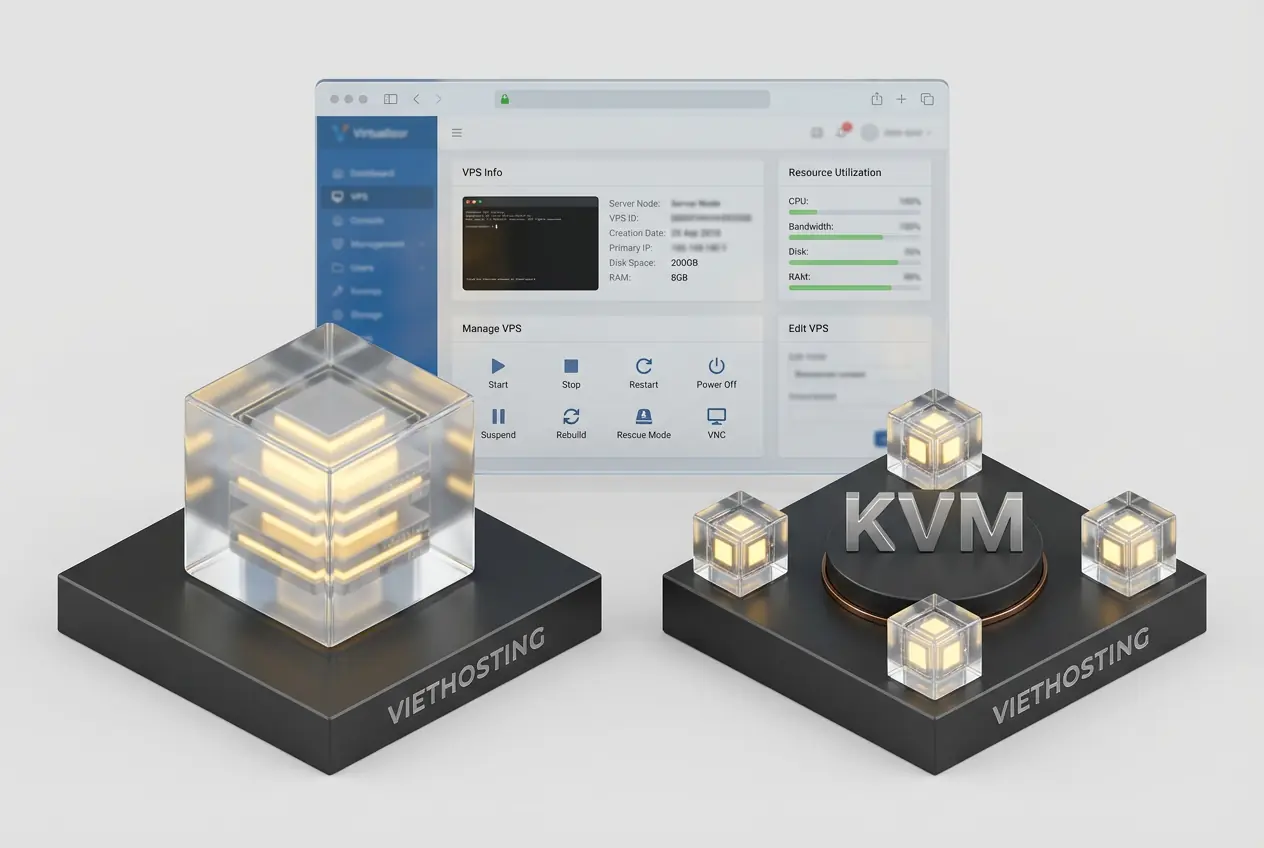
A Vietnam VPS (Virtual Private Server) is a virtual machine created from a physical server located in data centers within Vietnam and assigned a Vietnamese IP address.
Thanks to its geographic proximity, this service delivers superior access speeds, extremely low latency, and high stability—even during international submarine cable outages. It is the ideal hosting solution for websites, applications, and systems targeting a primarily domestic audience.
Beyond standard plans, users often seek variants like Viettel VPS, VNPT VPS, or FPT VPS to leverage the specific network infrastructure of Vietnam's leading ISPs.
1. What is a Vietnam VPS?
Vietnam VPS is a virtual private server created from a physical server located in a data center in Vietnam and assigned a Vietnamese IP address. It provides dedicated computing resources such as CPU, RAM, and storage for running websites or applications.
Because the server is located within Vietnam, users in the country can access the website with lower network latency and faster loading speeds. Vietnam VPS is commonly used for websites and online services targeting Vietnamese users.
2. Technical Working Principle
A Vietnam VPS operates by establishing a virtualization layer (a hypervisor) on a powerful physical host:
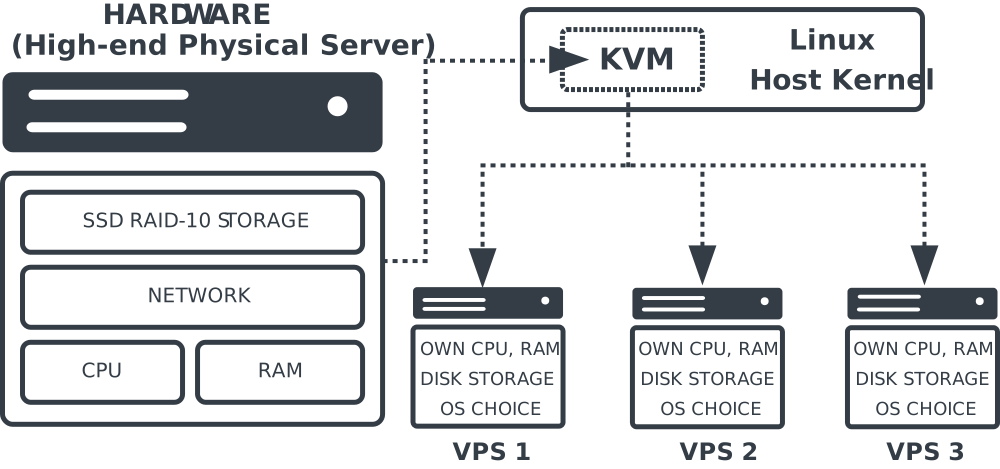
- Resource Virtualization: Utilizes technologies like KVM to partition hardware resources (CPU, RAM, SSD) into isolated virtual environments.
- Dedicated Allocation: Each VPS receives dedicated resources, ensuring performance is not affected by other tenants or “noisy neighbors” on the same host.
- Full Administrative Control: Functions as a mini-Dedicated Server, granting you the freedom to install any OS (Linux/Windows) and customize software configurations via Root/Administrator access.
3. Popular Types of VPS in Vietnam
Depending on project requirements and scale, VPS in Vietnam are typically deployed in several common forms:
4. When to Upgrade from Hosting to a Vietnam VPS?
While shared hosting is a great starting point, moving to a Vietnam VPS is necessary when your project experiences these signs:
- High Traffic Volumes: Your site reaches thousands of daily visitors and requires stable CPU/RAM to prevent downtime.
- Custom Software Requirements: You need to install services like Redis, NodeJS, Docker, or specific libraries not supported by standard web hosting.
- Higher Security Needs: A VPS provides complete isolation, minimizing the risk of malware infection from other sites on a shared system.
- Specific Applications: Running Game Servers, API Servers, or internal data processing systems.
5. Key Benefits of a Vietnam VPS
6. Vietnam VPS vs. Offshore VPS Comparison
| Criteria | Vietnam VPS | Offshore VPS |
|---|---|---|
| Domestic Speed |  Extremely fast & low latency Extremely fast & low latency |
 Slower, cable dependent Slower, cable dependent |
| Technical Support | 24/7 Local support & time zone | English, time zone gap |
| SEO & Compliance | Local SEO & Data laws advantage | Best for Global markets |
7. Why Choose Vietnam VPS at VietHosting?
We provide VPS solutions based on dedicated infrastructure with transparent resource commitments:
- Enterprise Hardware: 100% Dell servers, Intel Xeon Platinum CPUs, and high-performance SSD RAID-10.
- True KVM Virtualization: Guaranteed 100% real resources with zero overselling for consistent processing speeds.
- High-Speed Network Connectivity: Domestic connectivity up to 1Gbps, high-speed and stable international bandwidth (32Mbps shared, guaranteed minimum 10Mbps) with Unmetered Data Transfer.
- Large Clean IPv4 Pool: Flexible allocation of clean IPv4 ranges, supporting up to 64 IP addresses per VPS (up to /26 subnet) for SEO, VPN, Digital Marketing, or complex networking projects.
- Intuitive Control Panel: Full control to reboot, reinstall OS automatically, access VNC Console, and manage Root passwords with just a few clicks.
At VietHosting, both KVM VPS and Large VPS services are deployed on Dell Enterprise server infrastructure with Intel Xeon Platinum CPUs and SSD RAID-10. This ensures high performance, strictly dedicated resources, and flexible scalability for various types of projects.
Experience a powerful, secure virtual server platform with 24/7 expert technical support.
In summary: A Vietnam VPS is a powerful virtual server solution for websites and applications targeting users in Vietnam, offering strong advantages in access speed, data control, and local SEO optimization.
Related VPS Guides
Discover common VPS models, virtualization technologies, real-world use cases, and software often used to run virtual servers.
- What Is Offshore VPS? Benefits & Comparison to Vietnam VPS
- What is KVM VPS? The Benefits of KVM Virtualization
- What is Large VPS? The Dedicated Server Alternative
- What is a Dedicated Server? Benefits & When to Use It
- OpenVPN Server Multi IP: Assign a Dedicated IP per User
- What Is a Server License? How It Works, Benefits & Types