 Tiếng Việt
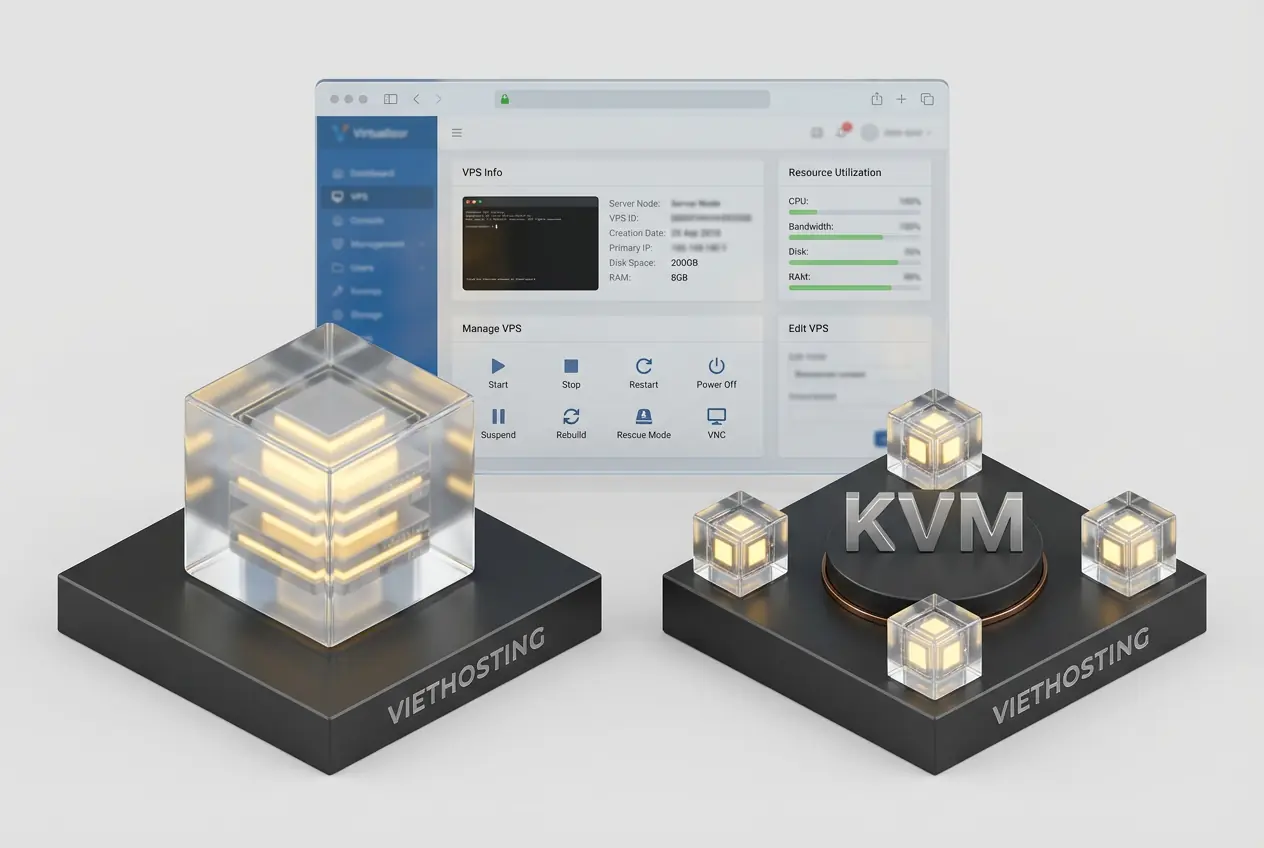
Vietnam VPS Overview & Selection Guide
Explore virtual servers with expert guidance. Backed by over 17 years of operational experience, VietHosting empowers you to choose the optimal VPS solution. Dive into the detailed comparison below.
1. VPS Overview
1.1. What is a VPS?
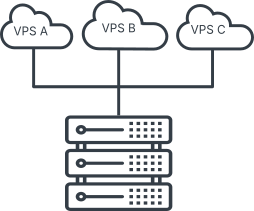
A VPS (Virtual Private Server) is a virtual machine created by partitioning a physical server into multiple independent virtual servers using virtualization technology. Each VPS operates independently like a dedicated server, with its own operating system, resources (CPU, RAM, storage), and a dedicated IP address, allowing users full administrative control to install and manage it like a regular physical server.
1.2. How does a VPS work?
A powerful physical server has a software layer called a "Hypervisor" installed on it. The hypervisor's job is to divide the physical server's resources (like CPU, RAM, and storage) and allocate them to individual virtual servers (VPS). Each VPS can then have its own operating system and software installed without affecting other VPS instances on the same physical machine.
1.3. When should you use a VPS?
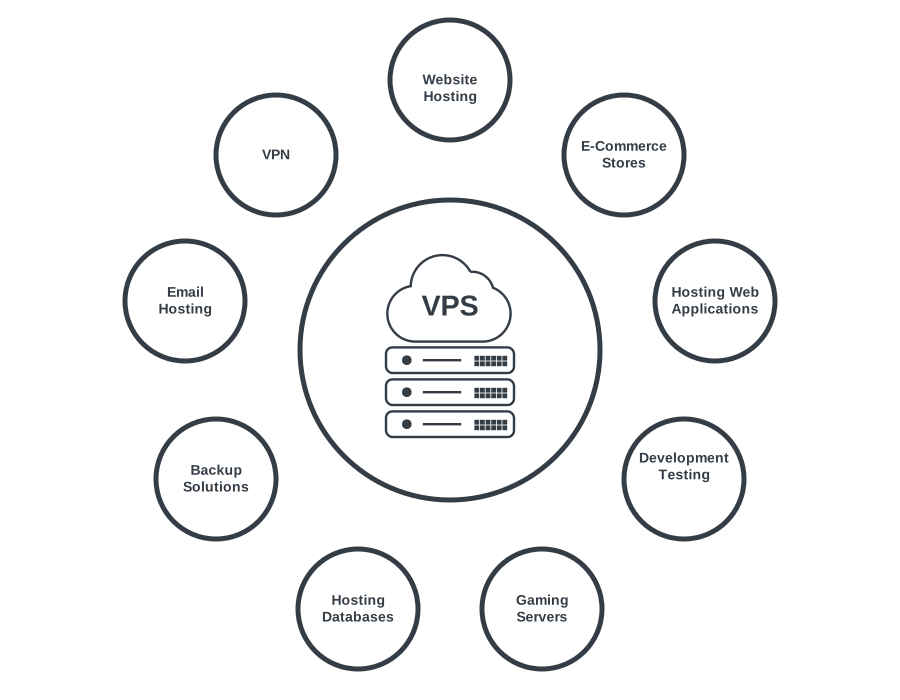
Upgrading to a VPS is the logical next step when your website outgrows the limits of standard Web Hosting. A VPS is especially ideal for:
- High-traffic websites, e-commerce stores, or applications with complex processing demands.
- Projects that require a high degree of customization over software and the operating system (full root/Administrator access).
- Specialized applications such as game servers, corporate email systems, private data storage, or development and testing environments.
1.4. Common Applications of a VPS
2. Common Types of VPS in the Market
In the market, a VPS is often classified by its geographical location, operating system, virtualization platform, or resource configuration to meet the specific needs of different customer groups.
2.1. Classification by Geography
2.1.1. What is a Vietnam VPS?
A Vietnam VPS is a virtual server created from a physical server located in a Data Center in Vietnam and has a Vietnamese IP address. It is the top choice for websites and applications targeting users within the country, thanks to superior access speeds and extremely low latency.
Additionally, you might encounter variants like Viettel VPS, VNPT VPS, or FPT VPS. These are VPS services created from physical servers in the respective carriers' data centers, designed to serve needs for an IP from a specific carrier. Essentially, they are a form of Vietnam VPS.
2.1.2. What is an Offshore VPS?
An Offshore VPS (often referred to as an "International VPS" or "Overseas VPS") is a virtual server created from a physical server located in a data center in a country different from that of the user or their company. This is often done to reach a local market in that country or to take advantage of different legal or cost policies.
For users in Vietnam, an Offshore VPS is any service with a physical server located outside of Vietnam. Common options are often named by location, such as VPS USA, VPS Singapore, or VPS Hong Kong. An offshore VPS is suitable when you need to reach an international audience, but it will have higher latency when accessed from Vietnam.
2.2. Classification by Operating System
2.2.1. What is a Linux VPS?
A Linux VPS is a virtual server that runs a Linux-based operating system (like CentOS, Ubuntu, Debian). It is a portion of a physical server that has been divided into multiple independent virtual servers, each with its own dedicated resources. It's the most popular choice for web servers and application development due to its stability, high security, flexibility, and low cost (no OS licensing fees).
2.2.2. What is a Windows VPS?
A Windows VPS is a virtual server running the Windows Server operating system. Each Windows VPS functions as a standalone server with its own OS and dedicated resources. This type of VPS is necessary for businesses using applications on the Microsoft stack, such as ASP.NET or MS SQL, or for specialized software that requires a Windows environment, like certain SEO tools or Forex trading platforms.
2.3. Classification by Virtualization Technology
2.3.1. What is an OpenVZ VPS?
OpenVZ VPS is a type of virtual server that uses OS-level virtualization based on a shared Linux kernel. While this makes it resource-efficient, its major drawback is poor resource isolation, making it susceptible to performance issues caused by other VPS instances on the same server (a phenomenon known as "overselling").
2.3.2. What is a Xen VPS?
A Xen VPS is a type of Virtual Private Server (VPS) created using Xen Hypervisor virtualization technology. It allows each VPS to operate independently like a dedicated server, with exclusively allocated resources (CPU, RAM, storage) that are not shared with other VPS instances on the same physical server. Xen VPS offers high performance, strong security, and flexibility in resource management. It is one of KVM's main competitors in the professional hosting services environment.
2.3.3. What is a KVM VPS?
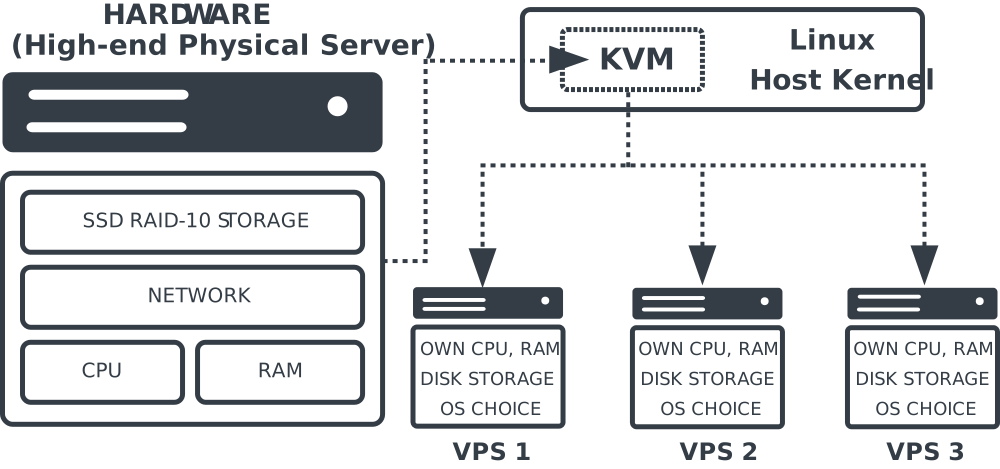
A KVM VPS is a Virtual Private Server created using KVM (Kernel-based Virtual Machine) virtualization technology. It is a true hardware-level virtualization solution that allows each VPS to operate as a completely independent physical server with its own dedicated RAM and CPU resources that are not shared.
Thanks to its native integration into the Linux kernel, KVM can achieve near-native performance, making it the gold standard for tasks that demand high stability and processing power. Compared to Xen, KVM often provides better hardware support and excels at running Windows Server with high performance.
2.4. Classification by Management & Resources
2.4.1. What is a Large VPS (High-Resource VPS)?
A Large VPS (or High-Resource VPS) is a premium line of virtual servers designed with a massive allocation of resources (CPU, RAM, storage). It is the ideal solution for systems that demand processing power equivalent to a mid-range dedicated server but with the cost and flexibility of a VPS, making it a perfect dedicated server alternative.
2.4.2. What is a Cloud VPS?
A Cloud VPS is a type of virtual server deployed on cloud computing infrastructure, utilizing a cluster of physical servers. It combines the advantages of a traditional VPS with the flexibility of the cloud, offering features like instant scalability and high availability. However, its pay-as-you-go model can lead to unpredictable costs compared to a fixed-resource VPS if your usage is consistently high.
3. Comparing VPS Types: Which is Right for You?
3.1. Vietnam VPS vs. Offshore VPS
| Factor | Vietnam VPS | Offshore VPS |
|---|---|---|
| Target Audience | Websites/applications with a primarily Vietnamese user base. | Websites/applications with a primarily international user base. |
| Speed (from Vietnam) | Very fast, low latency. | Slower, high latency. |
| Cost | Generally higher due to local infrastructure and bandwidth costs. | Often more competitive pricing in certain segments. |
| Local SEO | Good, a Vietnamese IP is an advantage. | No advantage for the Vietnamese market. |
3.2. Linux VPS vs. Windows VPS
| Factor | Linux VPS | Windows VPS |
|---|---|---|
| Performance | Lightweight, stable, consumes fewer resources. | Requires higher hardware specifications. |
| Security | Highly regarded for its security by the community. | A more common target for attacks due to the OS's popularity. |
| Cost | Lower (no OS licensing fees). | Higher (includes Windows Server license fees). |
| Applications | Web servers (PHP, MySQL), open-source software. | Running .NET, MS SQL, and tools requiring a Windows environment. |
3.3. Virtualization Technology Comparison: KVM vs. Xen vs. OpenVZ
The choice of virtualization technology directly impacts performance, stability, and security. Below is a comparison of the most popular technologies today.
| Factor | KVM (VietHosting's Choice) | Xen | OpenVZ (Legacy Technology) |
|---|---|---|---|
| Virtualization Level | Hardware Virtualization | Hardware Virtualization | OS-level Virtualization |
| Resource Isolation | Absolute (100% Dedicated Resources) | High (Nearly dedicated resources) | Low (Shared Kernel) |
| OS Support | Linux, Windows, Custom ISO | Linux, Windows | Linux Only |
| Performance | Very high, near-native speed | High and stable | Lower and less stable |
4. High-Performance Vietnam VPS Services at VietHosting
After careful review and comparison, it's clear that a Vietnam VPS using KVM technology is the optimal choice for performance, stability, and security for most needs. At VietHosting, we focus on providing specialized VPS solutions on this superior platform.
4.1. Superior Infrastructure & Technology
All of our Vietnam VPS services are built on a powerful and unified platform:
- Dell Enterprise Servers: Ensuring 24/7 durability and stability.
- Intel Xeon Platinum CPUs: Providing superior processing power for all tasks.
- Enterprise SSD RAID-10 Storage: For extremely fast and secure data read/write speeds.
- KVM Virtualization Technology: Our commitment to true resources and true performance.
4.2. KVM VPS at VietHosting
A flexible and powerful VPS solution with 100% dedicated resources, ideal for websites, applications, and projects requiring high stability.
4.3. Large VPS (High-Resource VPS) at VietHosting
A Vietnam VPS solution with massive resources, providing processing power equivalent to a mid-range dedicated server with better cost-efficiency and flexibility.
4.4. KVM VPS vs. Large VPS at VietHosting
Essentially, a Large VPS (or High-Resource VPS) is a "big brother" version of a KVM VPS. Both are built on the same premium KVM platform. The main difference lies in the scale of resources and the target audience.
| Factor | KVM VPS | Large VPS (High-Resource VPS) |
|---|---|---|
| Resources (CPU/RAM/SSD) | Scalable configurations for standard needs. | Very high-resource configurations with superior power. |
| Target Audience | Small to medium websites/apps and general-purpose projects. | Systems requiring very high performance, large e-commerce, complex applications. |
| Purpose | A powerful and stable VPS solution for all needs. | A cost-effective alternative to a dedicated server. |
5. Why Choose a Vietnam VPS from VietHosting?
We don't just talk about superior performance; we prove it. Below are the actual network speed test results from a basic KVM VPS package at VietHosting, demonstrating the powerful infrastructure you will get:
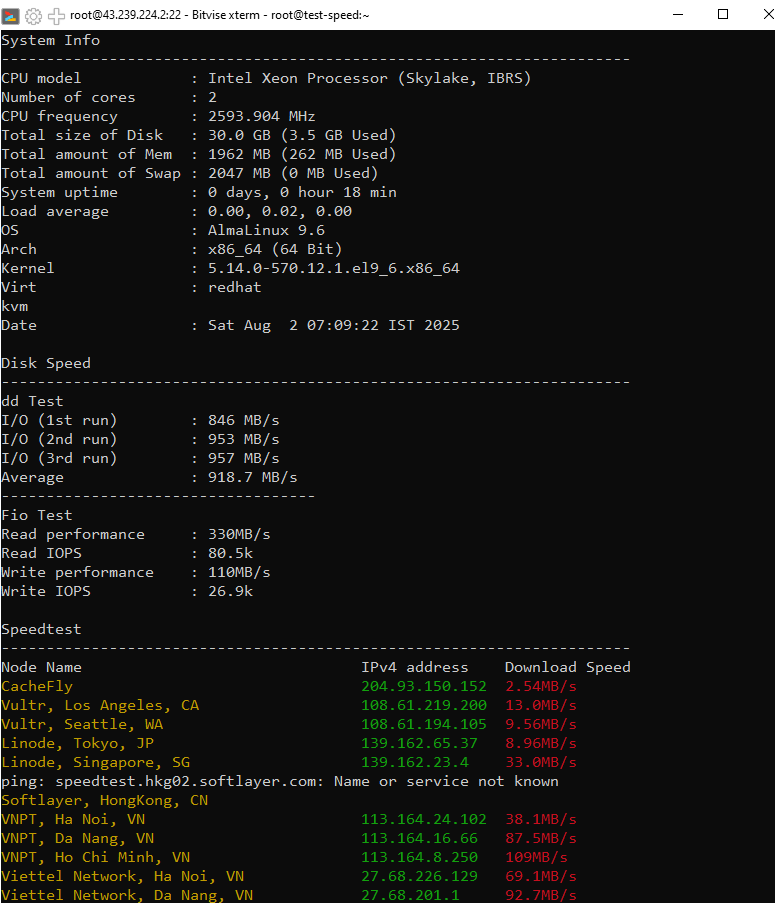
To achieve this impressive performance and deliver the best service experience, we build our commitment on the following core foundations: